 Ampliflare Audio Article
 Ampliflare Audio 1.0: Offline Noise Removal, Now Open Source
Ampliflare Audio 1.0 strips background noise from speech on your own computer, on Mac, Windows and Linux. The same day, its source went public under the AGPL.

Ampliflare Audio removes fans, hum, traffic and room noise from recorded speech. Podcasts, voiceovers and audiobooks come out sounding like they were made in a treated studio. A deep learning model trained on speech does the work, right on your computer. Nothing is uploaded, and it works offline.
The tools
Five tools, each built to run over a whole session of files at once:
- Remove noise cleans up speech in one pass. A Strength slider keeps more of the original room when you want it.
- Enhance evens out loudness to what each place expects: music streaming, podcasts, audiobooks or broadcast. It drops low rumble too.
- Cut keeps only the part you mark, and Split breaks one recording into pieces. Both show a picture of the sound, so the pauses are easy to find.
- Convert changes the format: mp3, wav, m4a, flac, ogg or opus.
Your originals are never changed.
Open source
The source code is public on GitHub under the GNU AGPL. Anyone can build it and use their build for anything, work included. The app comes with its own copy of ffmpeg, so there’s nothing else to install.
Every tool is free for personal use, up to 20 files a week. A license adds commercial use and removes the limit.
Ampliflare Audio runs on macOS (Apple silicon and Intel), Windows and Linux. For the full list of what changed in each version, see the changelog.
Read next
- Ampliflare Audio 1.0Ampliflare Audio 1.0 lets you choose where results go, rebuilds the Split tool and adds licenses for commercial use. 1.0.1 bundles ffmpeg and makes the source public under the AGPL.
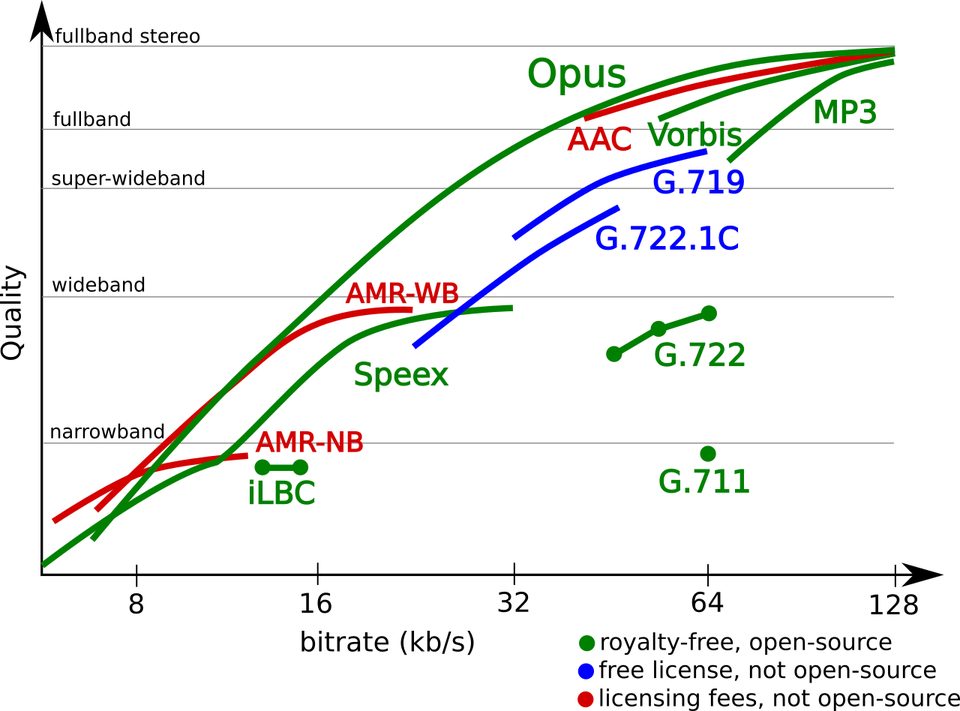 What Is an Opus File? The Audio Codec ExplainedOpus is an open audio format that sounds better than MP3 at the same file size. Here's what it is, where you'll meet it, and how to open and convert it.
 Best Sound Repair Software for Damaged RecordingsRepair recorded audio by matching the damage to the tool: steady hiss and hum, clicks and crackle, or clipped peaks. Four picks compared, free and paid, October 2026.